Sunday, March 4, 2012

Barn Dance a Huge Success!


To kick off winter break, SK held its annual Barn Dance at a nearby school auditorium. Students got to show off their skills in various community dances they learned throughout the month, including US square dances and folk dances from Israel, Québec, England, and the Ukraine. Val, our beloved kindergarten teacher, offered her photography skills for the evening:

A 5/6 and 3/4 student partner up for "Sasha!"

We were lucky to have not only a large proportion of SK students and parents show up, but also grandparents, siblings, and other relatives and friends. It was a delight to see such a wide range of people laughing, smiling, (and sweating) while trying to follow along with the dance steps.
Listening to instructions ...
Many thanks to the SK Parent Engagement Committee for planning the event, spreading the word, and encouraging attendance. Thank you also to the parents who arrived early to set up and decorate, as well as those who stayed late to clean. The auditorium was transformed into a Western-themed wonder, complete with a barn, lanterns, hay bales, and a (cardboard) campfire. While not dancing, kids and adults could take part in various games and activities, or just eat snacks and enjoy conversation with fellow community members.  The kids were thrilled to see Jan, last year’s music teacher, who graciously agreed to call the dance. The SK community is amazing!
Joanna lends a hand at ring toss.

Strike a pose.

Sunday, February 12, 2012

Field trips

5/6 students had a great time visiting Oz's Music Environment this week, gaining exposure to brass instruments. I unfortunately missed a golden photo opportunity: we had Danny on French horn, Aristea on bugle, Isobel on alto horn, Cory, Mikey, and Saul on on trumpet/cornet, Atty on trombone, and Trent on baritone. After practicing their buzzing embouchures, they were able to make a marvelous racket. With conducting and coaching from Oz, they were able to use their previous recorder experiences to help them articulate notes and follow conducting signals. They even played the rhythm to "Hail to the Victors" and sight-read some other rhythms. Students rated this trip an overwhelming thumbs up, and we may return to give kids a chance to try other instruments.

Many thanks to Steve Oz for providing this experience, and to Mr. B for offering to chauffeur us there and back again.

The entire K - 2 crowd will be going to Hill Auditorium to see Sweet Honey in the Rock on Friday. This trip complements our Migrations theme perfectly, as we have been listening to and learning music related to African American migrations. K-2 students have learned to sing one of Sweet Honey's songs, "All for Freedom," and all grades have been discussing how music helped migrating people to express their emotions at leaving home, as well as to remind themselves of home.

In other news, this blog post was typed by my right hand alone, as my left arm was broken in an unfortunate incident with some ice while walking my dog this weekend. Full recovery is expected, but I won't be able to properly demonstrate instrument playing for a while, and may have to miss some days this week.

Sunday, February 5, 2012

Musical Maps

In January, we took the opportunity to explore various ways that visual and kinesthetic maps could improve our understanding of music. First through sixth graders all enjoyed discovering how "listening maps" were related to various pieces of music, especially the second movement of Haydn's "Surprise" Symphony. Listening maps are a visual tool to help music listeners hear and remember the salient features of a composition without having to be able to read music notation. At the same time, it prepares students for reading music notation. Students loved the folk story about the musical "surprise,"a fortissimo chord placed in the middle of the traditionally quiet and soothing second movement: Haydn put it there to wake concertgoers that had fallen asleep. Unfortunately, Wikipedia says Haydn denied the story in his old age. Students went into the symphony in more depth depending on age and interest (the 3/4s could not get enough). We compared the listening map to the musical score, picked out notation examples we recognized in the score, and eventually came to a greater understanding of how the musical score translated into the music we heard. We also used the listening map as a more traditional map and walked along the path it charted while listening to the music.

Relatedly, we also tried some Dalcroze movement and singing techniques I learned from David Frego at a music conference I recently attended. Students used the classroom floor to physically map the auditory difference between pitches. Each student chose a spot on the floor to represent the starting note of a song or scale, then chose another place forward or backward for each note, depending on the pitch's distance and whether it was higher and lower. We then sang through songs or scale patterns, stepping on each "note" as we sang it. The 5/6s especially benefited from this technique; I heard tuneful singing from some otherwise reluctant singers. Also, it helped fidgety students to productively use their energy while singing.

First and second graders also learned how to map rhythms using popsicle sticks and written notation to communicate rhythmic patterns to their classmates. Fifth and sixth graders were given a similar task: to compose and notate a variation on a given theme to share with classmates. Many students were excited about improving their knowledge of treble clef notation for pitches sung or played on the barred instruments. I am hoping they will be able to use this improved knowledge to notate songs they composed through vocal improvisations earlier in the month.


Sunday, January 29, 2012

Mapping Mr. Waggle and Ms. Wiggle


Dramatis personae

To kick off the maps theme a couple of weeks ago, Kindergarteners loved hearing the story of Ms. Wiggle and Mr. Waggle, two star-crossed friends with very different voices. Mrs. Wiggle lived in the the highest tower of a castle on top of the highest mountain, with a high-pitched voice to match. Mr. Waggle, on the other hand, lived in the very bottom of the deepest sea with, of course, a low, deep voice. Both get lonely while home alone, so travel down hills and up valleys to find a friend. their voices changing in pitch as they change in altitude. At the end of the story, they meet on a unison pitch.

Simple enough, right? The Kindergartners could not get enough of this story!

They retold the story and illustrated it with improvisations on the barred instruments, playing higher or lower notes as the characters went higher or lower. Then the students, always eager to draw, drew maps of the paths between the two houses or the houses themselves. Finally, students worked with partners to arrange bits of yarn to map the paths between the houses, then took turns singing each other's paths. Students were quite involved and creative in laying out their paths, and took pride in showing and singing the paths to the rest of the class. 

This was a great way to prepare for music reading, when higher pitches are higher on the page. Also, students were able to use visual, kinesthetic, and interpersonal intelligences to build on their musical intelligence. I heard some of the children's head voices for the first time in music class. 

Many thanks to Janet Greene for the idea for this story, which I experienced at the San Francisco Orff workshop this past summer.

Thursday, December 22, 2011

Human Body Music

We had a great time in Music this month exploring all the different sounds our bodies could make. All groups practiced echoing patterns of "body percussion" - an Orff pedagogical staple to help kids learn and internalize rhythm patterns for composition, playing on the instruments, or just plain fun. The traditional levels include stomping your feet, patting your thighs, clapping your hands, and snapping your fingers.

Kindergartners, at left, worked with partners to see how many different sounds they could make with their hands, then planned, rehearsed, and put on performances for their classmates. I was impressed by the focus these young kids were able to put towards the task. The Ks also enjoyed taking their hands to drums to make a variety of sounds, from smacking them as hard as possible to light tiptoeing around the edge of the drum. The students' favorite moment had to be when I allowed them to take mallets to the drums, allowing them to make much louder sounds. Thankfully, they quickly learned to respond to my conducting cues. We also worked with different ways of using our bodies to express rhymes and poems: singing, speaking, whispering, clapping, stomping, patting, and, the kids' favorite, shouting.

1/2 classes worked on a body percussion composition project. First, they brainstormed things they liked to do in the wintertime, leading to interesting discussions of how different families celebrated different holidays at this time of year. The students then chose their favorite activities to use as rhythmic building blocks, fitting body percussion patterns to the rhythm of the words. The class then voted on their favorite patterns, which we used as a basis to improvise and compose melodies on the barred instruments.
Susan's class chose:

Ice skating
Snowball wars
Spin the dreidel
Bake cookies

Ice skating
Snowball wars
Spin the dreidel
Sleep


while Elaine's class is working with:

Throw snowballs
Build a snowchair
Destroy snowman
Runny nose

We also used an idea of Kit's and learned the traditional song "Dem Bones" using the medical names for the bones (and omitting overt religious references). Here're the first two verses of our adaptation: 

Ezekiel cried, "Dem dry bones!"
"Now hear the names of my bones:

Phalanges connect to the metatarsals,
Metatarsals connect to the tarsals,
The tarsals connect to the tibia,
Now shake dem skeleton bones!

Upper school students echoed more complicated rhythmic patterns using body percussion, including syncopation and Keith Terry's jazzier body percussion techniques and patterns. The 3rd and 4th graders are steadily improving their abilities to echo patterns in 3/4 time, differentiating them from the more common meters of 2/4 and 4/4 time. The students used body percussion to compose ostinati to accompany their recitations of "Slithergadee" and practice hand crossover techniques for barred instrument playing. We also tried out various conducting patterns to help students learn to feel different meters. Most of the students took to conducting immediately, some with extreme vigor, and others with extreme precision and grace.

I also used the human body theme to try some musician's yoga with the 3-6 students. The 3/4 students especially showed immediate improvement in their singing and recorder tone after working through deep breathing exercises.

The 5/6 students put on a performance of their instrumental and vocal piece for the K-2s on Tuesday (the students elected to omit the body percussion element, as they were way more enthusiastic about the instruments). The 5/6s were extremely gracious hosts and hostesses, even inviting the younger students to perform for them at the end. The K-2s were an attentive and enthusiastic audience, with Eli shouting "Encore! Encore!" at the end. Mikey then shared a harp performance with us, and several K-2 students stepped up for a turn at the piano. I was so proud of all! Thanks to the K-2 teachers for taking time out of their busy schedules to give us an audience.

For all grades, I couldn't resist playing parts of the Nutcracker Suite for the children's movement warmups, as one of my favorite seasonal traditions. We also sang traditional songs about the season, Hanukkah, and Christmas, as requested by students. Now, time to enjoy one of the season's best traditions: break!


Friday, December 16, 2011

Poem Recordings


Susan’s class finished recording their poem, Shel Silverstein’s “Tree House” last week. I was impressed with how quickly many of the kids were able to memorize the words. They decided to use whispering, shouting, high-pitched, and “adults telling you what to do” voices for contrast and to convey the meaning of the poem. See if you can pick them out! Elliot inspired us with a rendition of Taio Cruz’ song Dynamite (turns out it’s the favorite pop song of SK K-2, who knew?), and I challenged the kids to put that same energy into their recitation. They obliged: 


The kids also made some great decisions about different instruments/timbres to use to accompany the poem. However, we found that when kids had the instruments in front of them, all their concentration went into playing, and they weren’t able to give the poem its due. If we had had more time to rehearse, it could have happened, but they chose to finish and move on. They had a great time and were absolutely in love with how they sounded throughout the process; after hearing their first take, one student said, “There’s no way we can do better than that!” Then they did.


Elaine’s class is taking a bit longer to record their poem, as there was some disagreement about which poem they should do, and they are adamant about using instruments. The students were initially excited about recording their own poems, but ended up voting for Shel Silverstein’s “Magic.” Similarly to Susan’s class, the students are fascinated by hearing their own voices coming out of the music room speakers, and can’t wait to hear how each take comes out. Here’s their December 7 recording, for posterity:


The 3/4 class is also working on recording “Slithergadee” by Shel Silverstein, to complement our study of triple meters (the poem has a 6/8 feel). They came up with hilarious ideas, but we’ve been so busy working on human body and recorder improvisation studies, we only had time for an informal first take so far:

Sunday, December 4, 2011

Author/Illustrator Wrap-Up: Shel Silverstein wins landslide victory

Though I offered a range of choices to each class, the 1/2 and 3/4 classes all chose a Shel Silverstein poem for their recording. Good thing I offered different poems to each class! However, Elaine's class is considering using poems written by students instead ... we'll see how the vote turns out tomorrow! 1/2 classes played with dynamic, tempo and instrumental contrasts to aurally illustrate the meaning of their poems. Their results are shaping up pretty well so far!

3/4s had another magical musical moment with their musical piece based on Japanese haiku and children's games. Some decided to learn the Kagome melody on the recorder, while others sang it in Japanese. We then set the melody to an ostinato (short, repetitive melody) created by two of the children and rounded it out with other ostinati on the low and high barred instruments. The results were lovely. The students were so excited and amazed by the music they created, they exclaimed that they wanted to practice it until Reflections Night in May to share with their parents. I got a little teary-eyed, I'll admit.

5/6s have continued to learn various ways to use their bodies as percussion instruments. They've decided they want to perform an intricate piece involving body percussion and barred instruments for the younger kids at the end of the month. They also decided to add additional body percussion patterns based on the Keith Terry patterns we've been learning. In general, we have been working on ensemble skills, and the kids are improving in their abilities to listen to each other and be considerate ensemble members.
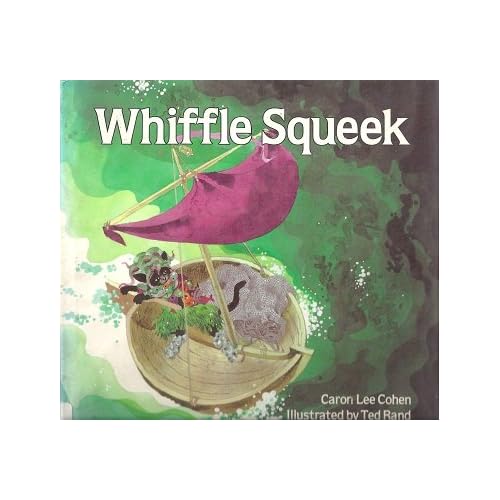
Kindergartners' favorite music activities this week included recording their voices to start their digital portfolios, conducting each other in various locomotor movements (hop, gallop, walk, jump, tiptoe) to a steady beat, and hearing the first half of the story of Whiffle Squeek, sung to the tune of "Aiken Drum."