Thursday, December 22, 2011

Human Body Music

We had a great time in Music this month exploring all the different sounds our bodies could make. All groups practiced echoing patterns of "body percussion" - an Orff pedagogical staple to help kids learn and internalize rhythm patterns for composition, playing on the instruments, or just plain fun. The traditional levels include stomping your feet, patting your thighs, clapping your hands, and snapping your fingers.

Kindergartners, at left, worked with partners to see how many different sounds they could make with their hands, then planned, rehearsed, and put on performances for their classmates. I was impressed by the focus these young kids were able to put towards the task. The Ks also enjoyed taking their hands to drums to make a variety of sounds, from smacking them as hard as possible to light tiptoeing around the edge of the drum. The students' favorite moment had to be when I allowed them to take mallets to the drums, allowing them to make much louder sounds. Thankfully, they quickly learned to respond to my conducting cues. We also worked with different ways of using our bodies to express rhymes and poems: singing, speaking, whispering, clapping, stomping, patting, and, the kids' favorite, shouting.

1/2 classes worked on a body percussion composition project. First, they brainstormed things they liked to do in the wintertime, leading to interesting discussions of how different families celebrated different holidays at this time of year. The students then chose their favorite activities to use as rhythmic building blocks, fitting body percussion patterns to the rhythm of the words. The class then voted on their favorite patterns, which we used as a basis to improvise and compose melodies on the barred instruments.
Susan's class chose:

Ice skating
Snowball wars
Spin the dreidel
Bake cookies

Ice skating
Snowball wars
Spin the dreidel
Sleep


while Elaine's class is working with:

Throw snowballs
Build a snowchair
Destroy snowman
Runny nose

We also used an idea of Kit's and learned the traditional song "Dem Bones" using the medical names for the bones (and omitting overt religious references). Here're the first two verses of our adaptation: 

Ezekiel cried, "Dem dry bones!"
"Now hear the names of my bones:

Phalanges connect to the metatarsals,
Metatarsals connect to the tarsals,
The tarsals connect to the tibia,
Now shake dem skeleton bones!

Upper school students echoed more complicated rhythmic patterns using body percussion, including syncopation and Keith Terry's jazzier body percussion techniques and patterns. The 3rd and 4th graders are steadily improving their abilities to echo patterns in 3/4 time, differentiating them from the more common meters of 2/4 and 4/4 time. The students used body percussion to compose ostinati to accompany their recitations of "Slithergadee" and practice hand crossover techniques for barred instrument playing. We also tried out various conducting patterns to help students learn to feel different meters. Most of the students took to conducting immediately, some with extreme vigor, and others with extreme precision and grace.

I also used the human body theme to try some musician's yoga with the 3-6 students. The 3/4 students especially showed immediate improvement in their singing and recorder tone after working through deep breathing exercises.

The 5/6 students put on a performance of their instrumental and vocal piece for the K-2s on Tuesday (the students elected to omit the body percussion element, as they were way more enthusiastic about the instruments). The 5/6s were extremely gracious hosts and hostesses, even inviting the younger students to perform for them at the end. The K-2s were an attentive and enthusiastic audience, with Eli shouting "Encore! Encore!" at the end. Mikey then shared a harp performance with us, and several K-2 students stepped up for a turn at the piano. I was so proud of all! Thanks to the K-2 teachers for taking time out of their busy schedules to give us an audience.

For all grades, I couldn't resist playing parts of the Nutcracker Suite for the children's movement warmups, as one of my favorite seasonal traditions. We also sang traditional songs about the season, Hanukkah, and Christmas, as requested by students. Now, time to enjoy one of the season's best traditions: break!

Friday, December 16, 2011

Poem Recordings


Susan’s class finished recording their poem, Shel Silverstein’s “Tree House” last week. I was impressed with how quickly many of the kids were able to memorize the words. They decided to use whispering, shouting, high-pitched, and “adults telling you what to do” voices for contrast and to convey the meaning of the poem. See if you can pick them out! Elliot inspired us with a rendition of Taio Cruz’ song Dynamite (turns out it’s the favorite pop song of SK K-2, who knew?), and I challenged the kids to put that same energy into their recitation. They obliged: 


The kids also made some great decisions about different instruments/timbres to use to accompany the poem. However, we found that when kids had the instruments in front of them, all their concentration went into playing, and they weren’t able to give the poem its due. If we had had more time to rehearse, it could have happened, but they chose to finish and move on. They had a great time and were absolutely in love with how they sounded throughout the process; after hearing their first take, one student said, “There’s no way we can do better than that!” Then they did.


Elaine’s class is taking a bit longer to record their poem, as there was some disagreement about which poem they should do, and they are adamant about using instruments. The students were initially excited about recording their own poems, but ended up voting for Shel Silverstein’s “Magic.” Similarly to Susan’s class, the students are fascinated by hearing their own voices coming out of the music room speakers, and can’t wait to hear how each take comes out. Here’s their December 7 recording, for posterity:


The 3/4 class is also working on recording “Slithergadee” by Shel Silverstein, to complement our study of triple meters (the poem has a 6/8 feel). They came up with hilarious ideas, but we’ve been so busy working on human body and recorder improvisation studies, we only had time for an informal first take so far:

Sunday, December 4, 2011

Author/Illustrator Wrap-Up: Shel Silverstein wins landslide victory

Though I offered a range of choices to each class, the 1/2 and 3/4 classes all chose a Shel Silverstein poem for their recording. Good thing I offered different poems to each class! However, Elaine's class is considering using poems written by students instead ... we'll see how the vote turns out tomorrow! 1/2 classes played with dynamic, tempo and instrumental contrasts to aurally illustrate the meaning of their poems. Their results are shaping up pretty well so far!

3/4s had another magical musical moment with their musical piece based on Japanese haiku and children's games. Some decided to learn the Kagome melody on the recorder, while others sang it in Japanese. We then set the melody to an ostinato (short, repetitive melody) created by two of the children and rounded it out with other ostinati on the low and high barred instruments. The results were lovely. The students were so excited and amazed by the music they created, they exclaimed that they wanted to practice it until Reflections Night in May to share with their parents. I got a little teary-eyed, I'll admit.

5/6s have continued to learn various ways to use their bodies as percussion instruments. They've decided they want to perform an intricate piece involving body percussion and barred instruments for the younger kids at the end of the month. They also decided to add additional body percussion patterns based on the Keith Terry patterns we've been learning. In general, we have been working on ensemble skills, and the kids are improving in their abilities to listen to each other and be considerate ensemble members.
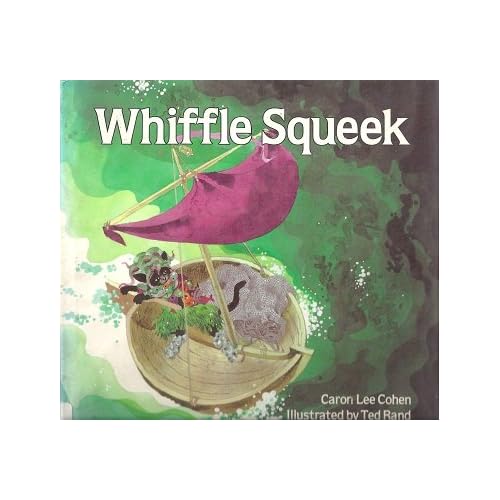
Kindergartners' favorite music activities this week included recording their voices to start their digital portfolios, conducting each other in various locomotor movements (hop, gallop, walk, jump, tiptoe) to a steady beat, and hearing the first half of the story of Whiffle Squeek, sung to the tune of "Aiken Drum."

Wednesday, November 23, 2011

A Very Special Guest Episode

Nationally-known poet Christine Hume stopped by our 1/2 classrooms this week (full disclosure: she's a parent of one of our first graders, which is how I was lucky enough to get her to come in). She first shared some musical poetry readings done by her and by her college students. The kids were enthralled by the use of electric guitar on one of Christine's poems, and amused by the off-key singing of a college student on "I'm a Nut."

She then invited us to record a poem for One Pause Poetry’s mp3 archive project. The site, to be launched in the next month, will contain a featured audio recording of children and poets reading poetry. A different poem will be featured each day, and all recordings will be forever available in the archive. The website will be at http://www.onepausepoetry.org/. A mockup:
We've read through a few poems in each class. Susan's class voted unanimously for Treehouse by Shel Silverstein and Elaine's class will vote after break. Next up is learning the poem backwards and forwards, then deciding on the characteristics of sound we will use to convey the meaning of the poem, using voices and instruments.

Expressive poetry recitation is not only an important goal in itself, but also improves reading skills and helps children use their voices more effectively in singing. Thanks for this excellent opportunity for an authentic project, Christine!

Sunday, November 20, 2011

Body Music!

The 5/6 graders get to start the Human Body theme early, and so have already been learning about all the different types of music that humans can make with our bodies alone. We're so versatile.

Keith Terry heads up the International Body Music Festival, and is a pioneer in performing body music in the US. He gets an amazing variety of sounds from his hands and feet, then combines them with dance and humor. We've begun learning some of his simpler body percussion patterns, which are a great way to combine math and music as well as to continue building rhythmic and ensemble skills.


Keith did an informative segment about body music on PRI's The World:


We've also looked at the African-American art of stepping, and will be looking to Nick Cave's soundsuits and Rahzel's beatboxing as further inspiration to create a performance.

The students were excited to share their budding beatboxing talents, having just learned techniques in Chris' Hip-Hop EB. One student is already able to simultaneously hum a melody and beatbox a rhythm, à la Rahzel. Impressive!

I hope to harness the students' energy and enthusiasm toward creating an effective musical performance...stay tuned!

Author/Illustrator Studies

We're continuing to use books and illustrations to inspire our K-4 music-making. Some highlights:

1/2 classes enjoyed Lizard's Song by George Shannon, both listening to me read and supplying sound effects and singing when necessary (or fun). Elaine recommended the book to me (thanks, Elaine!); it illustrates how satisfying music can be both simple and personal.  Students then composed their own song lyrics based on what was near and dear to them. Subjects ranged from their parents and teachers to video games.

1/2 classes also studied the famous authors "Anonymous" and "Traditional," as collected by Iona Opie and illustrated by Rosemary Wells.
Because of their simple rhythms and interesting subject matter, nursery rhymes make great songs. We used Wee Willie Winkie as an inspiration for movement games and a simple song accompanied by Orff instruments.

Kindergartners have been their own illustrators as we prepare Au Clair de la Lune for their upcoming fête française. Students were especially captivated by Pierrot, the sad clown, and many dictated letters asking him not to be sad so he could tell jokes again. They had some excellent ideas for mood management techniques, as well!

We have been using this and other songs to experience and identify upward and downward pitch movement in music. Students especially loved improvising on the stepped glockenspiel while their classmates followed with movement.

3/4 classes have continued to use their haiku and the song Kagome, Kagome as musical fodder. We experienced a magical musical moment when some students, either by accident or on purpose, began the song a measure after others. Instead of chaos, it sounded gorgeous: the Kagome Canon was born! Students are accompanying themselves on Orff instruments, and learning about ostinati and pentatonic modes in the process.

We also used Opie and Wells' book to aid in learning our next recorder piece, "Cobbler, Cobbler". We will then use this piece as the basis for improvisations in the coming weeks. The kids are super excited about improvising after seeing the Rebirth Brass Band in action at our last field trip.

Friday, November 11, 2011

Why is it dark in the music room?

This week and last, we began our month of Author/Illustrator studies in Music. Our ordinarily light-filled music room was darkened with swaths of fabric hanging in the windows to set the stage for exploring the poems from the book A Pocketful of Stars: Poems about the Night, compiled by Nikki Siegen-Smith and illustrated by Emma Shaw-Smith. Again inspired by lessons designed by Orff educator Brian Crisp, the children first followed a beam of light with their hands and bodies, then later with the sounds of barred Orff instruments in our room. We then read the poem “Night Lights” by Michelle Magorian, and tried to use our conducting and improvisations to illustrate the poem with sound. The students had enormous amounts of fun conducting each other, and discovered characteristics of movement and the different barred instruments as they worked.

The image of a group of children moving as one and slowly stretching toward a beam of light was one of the most beautiful things I’ve seen in a while. I’m hoping it will be a lasting memory for the children as well as for me.